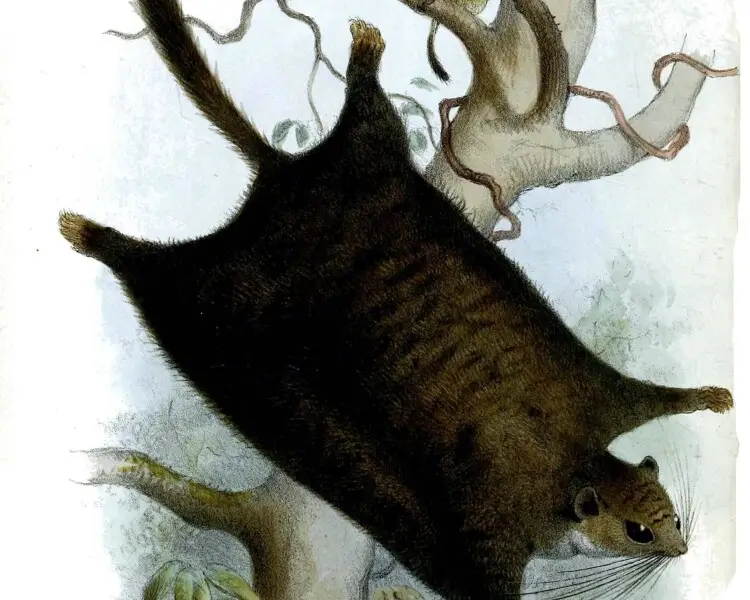
Los anomaluromorfos (Anomaluromorpha) son un suborden de mamíferos roedores. Este clado agrupa a las actuales familias Anomaluridae y Pedetidae, con cuatro géneros y nueve especies reconocidos, todas de África. También incluye, al menos, una familia fósil y varios géneros extintos, algunos de Asia.
Taxonomía
Los anomaluromorfos tienen 9 especies vivas en 4 géneros:
- Superfamilia Anomaluroidea Gervais, 1849
- Familia Anomaluridae
- Superfamilia Pedetoidea Gray, 1825
- Familia Parapedetidae † McKenna & Bell, 1997
- Parapedetes† Stromer, 1926
- Familia Pedetidae
- Familia Parapedetidae † McKenna & Bell, 1997
Los siguientes taxones fósiles también son considerados como anomaluroideos:
- Familia Zegdoumyidae † Vianey-Liaud, Jaeger, Hartenberger & Mahboubi, 1994
- Glibemys† Vianey-Liaud et al., 1994
- Glibia† Vianey-Liaud et al., 1994
- Lazibemys† Marivaux et al., 2011
- Zegdoumys† Vianey-Liaud et al., 1994
- Familia Nonanomaluridae†
- Nonanomalurus†
- Familia Nementchamyidae† Jackson & Thorington, 2012
- Kabirmys† Sallam et al., 2010
- Nementchamys† Jaeger, Denys & Coiffait, 1985
- Pondaungimys† Dawson et al., 2003
Referencias
- McKenna, Malcolm C. & Bell, Susan K. 1997. Classification of Mammals Above the Species Level. Columbia University Press, New York, 631 pp. ISBN 0-231-11013-8
- Carleton, M. D. and G. G. Musser. 2005. Order Rodentia. pp.745-752 in Mammal Species of the World A Taxonomic and Geographic Reference (D. E. Wilson and D. M. Reeder eds.). Baltimore, Johns Hopkins University Press.
- Marivaux, L., Essid E.M., Marzougui W., Khayati Ammar H., Merzeraud G., Tabuce R., Vianey-Liaud M. (2015). The early evolutionary history of anomaluroid rodents in Africa: new dental remains of a zegdoumyid (Zegdoumyidae, Anomaluroidea) from the Eocene of Tunisia. —Zoologica Scripta, 44, 117–134.
Enlaces externos
- Wikispecies tiene un artículo sobre Anomaluromorpha.